

ROSETTA
Rashid, is about 236 km away from Cairo. It is one of the cities and centres of the Beheira Governorate. It is an old port at the mouth of the western branch of the Nile in the Mediterranean Sea. Wandering between its streets and alleys is like a tour in the folds of history, as the ancient inhabitants of the Delta inhabited it, and it goes back to the ancient Egyptian name “Rakhit”. Which became “Rashit” in the Coptic era, and the pharaohs built fortifications on it against pirate attacks. During the reign of Alexander the Great, it was a centre for the manufacture of war wheels, and a large temple, “Plubanium”, was erected there in the Ptolemaic era.
The city’s current shape and layout date back to the era of the Abbasid Caliph al-Mutawakkil. In the Fatimid era, the city flourished and became an important commercial centre. After the departure of the campaign of Louis IX and in the Mamluk era, Al-Zahir Baybars minaret built a lighthouse. In the Ottoman era, it was a commercial centre linking Turkey and Egypt.
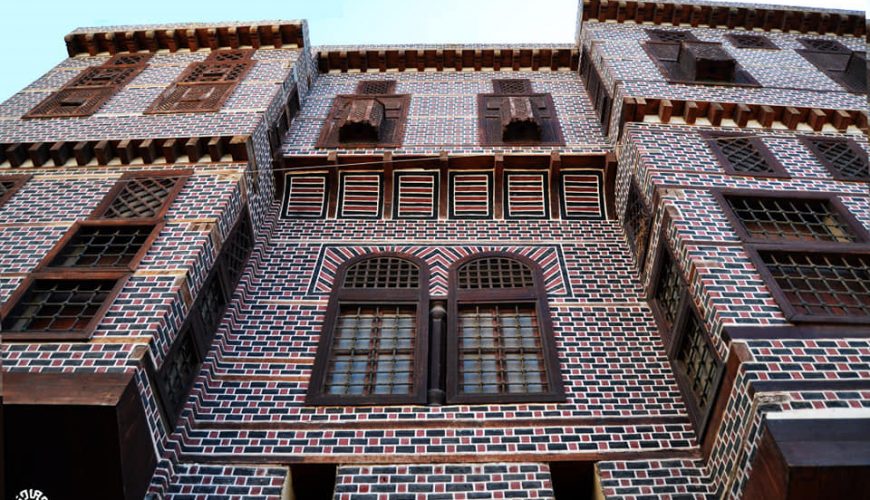
It was an independent governorate and had consulates of foreign countries before Cairo and Alexandria. It defeated the first British invasion of 1807 and was neglected throughout the British occupation of Egypt. The most important reason for its neglect was Muhammad Ali Pasha’s liquidation of the centres of power in Egypt to impose his complete control over the country. The defeat of the British in 1807 AD at the hands of the people of Rashid Led by Ali Bey El-Sanakly, he feared the emergence of a new centre of power, so he ordered the excavation of the Mahmoudiya Canal to divert the international trade route from Rashid to Alexandria. Rice and fishing have a large fleet of fishing vessels from the Nile and the Mediterranean, and in the city, 40 workshops manufacture 1,000 yachts annually and export them to Arab countries. In August 1799, while the French commander Bouchard was tasked with working in the restoration of Qaitbay Castle, a stone of black basalt was found with a length of A meter, a width of 73 cm, and a thickness of 27 cm, in an old wall that had to be demolished to lay the foundation for the Qaitbay Citadel, which will be called Saint Julian. He was dragged and ordered to be brought to his home in Alexandria, and after it was cleaned, he was transferred to Cairo to be examined by Napoleon, who sent him to France. The credit was then to John François Champollion, who deciphered the ancient Egyptian writing in September 1822. It dates back to 196 BC. The writings are recorded on it: hieroglyphics, demotic and ancient Greek. It is the record of the inauguration of the priests, King Ptolemy V, and recognition of him as king of the country. Currently, there is a huge project to develop the city and turn it into an open museum of Islamic antiquities. The city includes 22 houses from the Ottoman era, an antique bath, a mill, 12 mosques and a corner, as well as many houses with a distinctive architectural style, in which the ingenuity of architects in the Islamic eras is evident in the use of wooden balconies, mashrabiyas, carved bricks and prominent decorations in the facades of buildings, as well as the presence of a museum that immortalizes Anniversary of the gallant city’s victory over the English Fraser Campaign in 1807.

Comment (0)